
OpenAI’s Teen mode: Parents and Safety placed in the Driver’s Seat
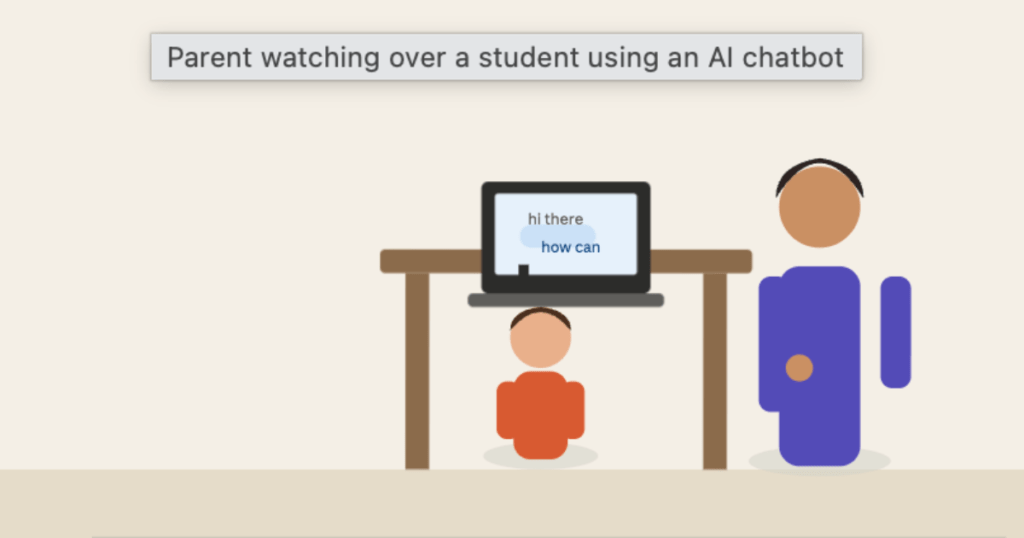
On August 18th, OpenAI announced its “Teen Mode.” This new mode will be targeted toward 13-17-year-olds and will be activated when either ChatGPT detects it is dealing with a youth user or the user’s age is stated in the conversation.
This upgrade adds two big features: parental controls and academic support.
Parental controls give parents and guardians the power to restrict hours and content exposure. In addition, guardians will receive alerts if anything alarming is said by their teen in conversation with ChatGPT. These new guardrails will make it easier for parents to (hopefully) monitor and guide their kids through learning how to use AI effectively and ethically.
The academic support feature introduces a new “study mode.” ChatGPT has stated, “We believe AI should expand educational opportunity,”1 and this mode will no longer give teen users “quick” answers, but instead ask them questions to help them reach their own conclusions.
The two new features are connected. The parental controls provide guardians with the power to turn on study mode automatically. With this, ChatGPT hopes to “support moments outside the classroom when help is not always available.”2 Study mode also includes homework reminders to improve teen responsibility, as well as quizzes and improved visualization tools to enhance interactive learning.
As a student and teen, these additions are beyond comforting, both for my concerns about my peers’ mental health as well as academic performance. I can feel confident that when I use ChatGPT, it will be a tool — not just giving me the answers, but allowing me to answer for myself. On a broader scale, “study mode” appears to be another step toward personalized, global education, which until now has been limited to a very select few. One of the world’s greatest wins would be a system in which education was free and available to all!
Additionally, this targeted use of AI guides it back toward being a tool, not a toy. By specializing the AI for study, the distracting content and risk of addiction provided by other popular technologies, such as social media, can be mitigated. Students, teachers, and parents alike can have peace of mind that their usage of AI will not spiral into an addiction, causing an unwanted and unhealthy amount of screen time.
Not only can I feel confident using AI in a way that enhances my learning, but I also hope that this age detection and parental controls will prevent AI from impacting the mental health of our youth. Parental controls and the under-18 experience will limit AI models from encouraging harmful eating practices, isolation, and, most importantly, suicide. Parents, assisted by the AI’s flagging, can intervene before it is too late. The study mode will also ensure that responses are focused and that ChatGPT does not stray off the path toward distracting and potentially harmful topics. These new tools can allow teens to be raised in a world where AI is unavoidable, but not unbridled.
However, I would like to emphasize “hope” in these sentences. We had “hoped” that social media’s boundaries would prevent youth from the dangers online. However, usage among youth is practically universal, and I see those around me suffering more and more from mental health problems, body comparisons, and being unable to put down their phone. This is not just my personal experience, but is supported by statistics. 46% of adolescents aged 13-17 said social media makes them feel worse, and studies have shown that 3+ hours of social media usage can double the risk of mental health issues.3 We need more than a list of supposed boundaries that are hardly ever enforced and can easily be avoided.
In avoiding these boundaries, we find students resorting to other, unregulated tools. After Anthropic’s ban on users under 18, I have seen multiple friends search for (and find, for that matter) other sources of AI. This search could lead to the exploration and discovery of chatbots created for companionship and more. Companionship with chatbots has already correlated (counterintuitively) with increased loneliness.4 While I have used models like ChatGPT as my primary source of AI, too many limitations could drive youth to other, more harmful, AI models. With ChatGPT’s new guidelines, how much more will the underground AI market thrive? At what point will governments listen to all the voices — youth, adults, and even founders — calling for true regulatory policy?
That said, I am most concerned about the many students already deeply dependent on AI for assignments, essays, and tests. What happens when their AI no longer does their work and grades plummet? The mental health effects on self-image and relational issues that can arise from a sudden drop in grades could send kids into a depression just as much as AI itself can.
While I am excited about the possibilities teens’ boundaries and guardrails offer, especially for those in the future, I can’t help asking: is it too late? Students are dependent on AI for academic assignments; AI usage has already begun to spiral just as social media did; more and more cases of inappropriate conversations between youth and AI arise. Can we reverse this? How can we take away the keys from a group that has already driven the immensely powerful and volatile vehicle that is AI?
[1] OpenAI. “Introducing the Teen Safety Blueprint | Openai.” Introducing ChatGPT for Teens: Built for Learning, Backed by Protections, 2026, openai.com/index/introducing-the-teen-safety-blueprint/.
[2] OpenAI. “Introducing the Teen Safety Blueprint | Openai.” Introducing ChatGPT for Teens: Built for Learning, Backed by Protections, 2026, openai.com/index/introducing-the-will alsoeen-safety-blueprint/.
[3] General, Office of the Surgeon. “Social Media and Youth Mental Health.” HHS.Gov, 26 Mar. 2026, www.hhs.gov/surgeongeneral/reports-and-publications/youth-mental-health/social-media/index.html.
[4] Gelfand, Alexander. “AI Companions May Worsen Loneliness for Vulnerable Users.” Stanford Report, Stanford University, 4 Aug. 2026, news.stanford.edu/stories/2026/08/ai-companions-chatbots-loneliness-research.
Check out more from the SHIELD Youth Council: