
Proximity is expertise
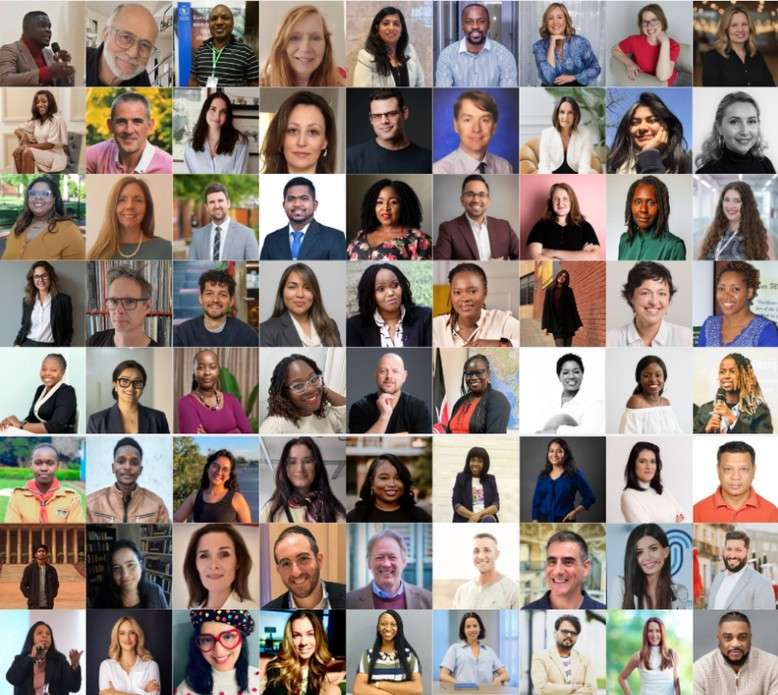
SHIELD connects and amplifies grassroots organizations, practitioners, and young people on the front lines of online safety and responsible AI, helping ensure lived experience and community-led solutions shape public conversations, policies, and decisions that influence the digital world.
01
Decentralized leadership
Why we work toward decentralized leadership
Right now, decisions about how technology is governed, what counts as harm, what gets regulated, whose evidence is taken seriously, are concentrated with institutions operating at a distance from where harm actually happens. The people who understand a harm well enough to respond to it, its specific conditions, its trust networks, what actually reaches the people affected, are rarely the people with a seat in that process.
SHIELD works to change where that leadership sits, pushing for the people closest to a given harm to have real influence over how it gets governed, not just consulted after the decisions are made. That’s the change SHIELD is organizing toward, across its network, its conferences, and its policy work.
02
Co-design as quality control
Why the details matter as much as the intent
A system built without input from the people it’s meant to serve is calibrated to assumptions rather than reality. Assumptions don’t fail because someone got them wrong on purpose, they fail because the person filling that gap didn’t have the information to get it right. Co-design closes that gap. It gives a system access to the information it needs to actually work, the same way testing or review would for any other technical requirement.
This shows up concretely in what actually gets built. When the people affected are in the room from the start, tools account for unreliable connectivity instead of assuming broadband, and disclosure systems get designed around what actually makes someone feel safe enough to speak, not around what looks thorough on paper. Co-design catches what an outside designer structurally cannot see, before it becomes a gap that harm falls through.
03
Local expertise
Why grassroots knowledge needs a way to reach further
Grassroots organizations often see a harm before anyone else does, in a support call, a pattern of incidents, a case that doesn’t fit existing categories. That knowledge usually stays where it was gathered. It doesn’t reach the regulators, platforms, or funders positioned to act on it, because it wasn’t collected in a form they can use, and no single organization has the resources to translate it into one on its own.
SHIELD treats that gap as something to design around. The conviction behind it is the same one behind everything else on this page: people closest to a harm already have the evidence that matters. What’s missing isn’t the evidence itself, it’s a way to carry it to the people and institutions who could act on it.
What this means in practice
Working toward decentralized leadership, treating co-design as a technical requirement, and building a way for local knowledge to reach further, these three shape every program SHIELD runs.
Project Catalyst identifies projects across the network that could combine into stronger, fundable collaborations, and works directly with those partners to write the proposal.
Voices of SHIELD is the network’s own affiliates sharing their expertise and stories directly, through conferences, policy working groups, and published storytelling.
The Global Alliance Network connects members so what one community has already learned can reach another.
The Mindset We're Shifting
Fragmented efforts, isolated expertise, and token representation have dominated technology governance. SHIELD changes this by creating a connected, community-led movement that amplifies influence and drives systemic change. We’re moving from:
Competition to Collective Power
From fragmented efforts to a living alliance that amplifies impact through shared leadership
Isolated Experts to Community-led Networks
From top-down expertise to co-created knowledge rooted in real-world experience.
Tokenism to True Equity in Voice
Ensuring underrepresented communities lead as co-creators, not symbolic participants.
Mistrust to Shared Purpose
Building trust through transparency, collaboration, and a common vision for a safer digital future.
Join Our Community for Online Safety
Contact us to talk about how you can get involved in our global collaborative community.